


.webp)

Ask anyone in presales right now, and you’ll hear a familiar story: the work has never been more complex or more critical.
Customers expect tailored demos, deep technical insight, and business empathy, all before they sign the dotted line. Meanwhile, products change weekly, messaging evolves monthly, and teams are somehow supposed to keep up.
That’s where presales enablement comes in. It’s no longer a “nice-to-have” onboarding function. It’s the quiet backbone that helps solution engineers (SEs) stay sharp, connected, and confident in front of customers. And yet, too often, enablement programs fall into the trap of being reactive:
- Training only when there’s time outside regular responsibilities
- Sharing content, only when it’s urgent
- Hoping for consistency that never quite materializes
The best presales teams have learned to think differently. They go beyond treating enablement as a single event. Instead, they build systems that scale learning, knowledge, and collaboration across the entire revenue engine.
While full on AI sales engineers might be a bit off in the future, there are still plenty of ways to make presales enablement better until then.
1. Get the Product Experience Right
One of the fastest ways to strengthen a presales team is to make the product itself easier to deploy. A smooth deployment frees Solution Engineers (SEs) to focus on customer outcomes instead of troubleshooting what should already work.
While responsibility sits with the product organization, the strain shows up first in presales. When SEs spend valuable time compensating for confusing onboarding flows or missing documentation, that is not a presales problem. It is a product problem in a presales disguise.
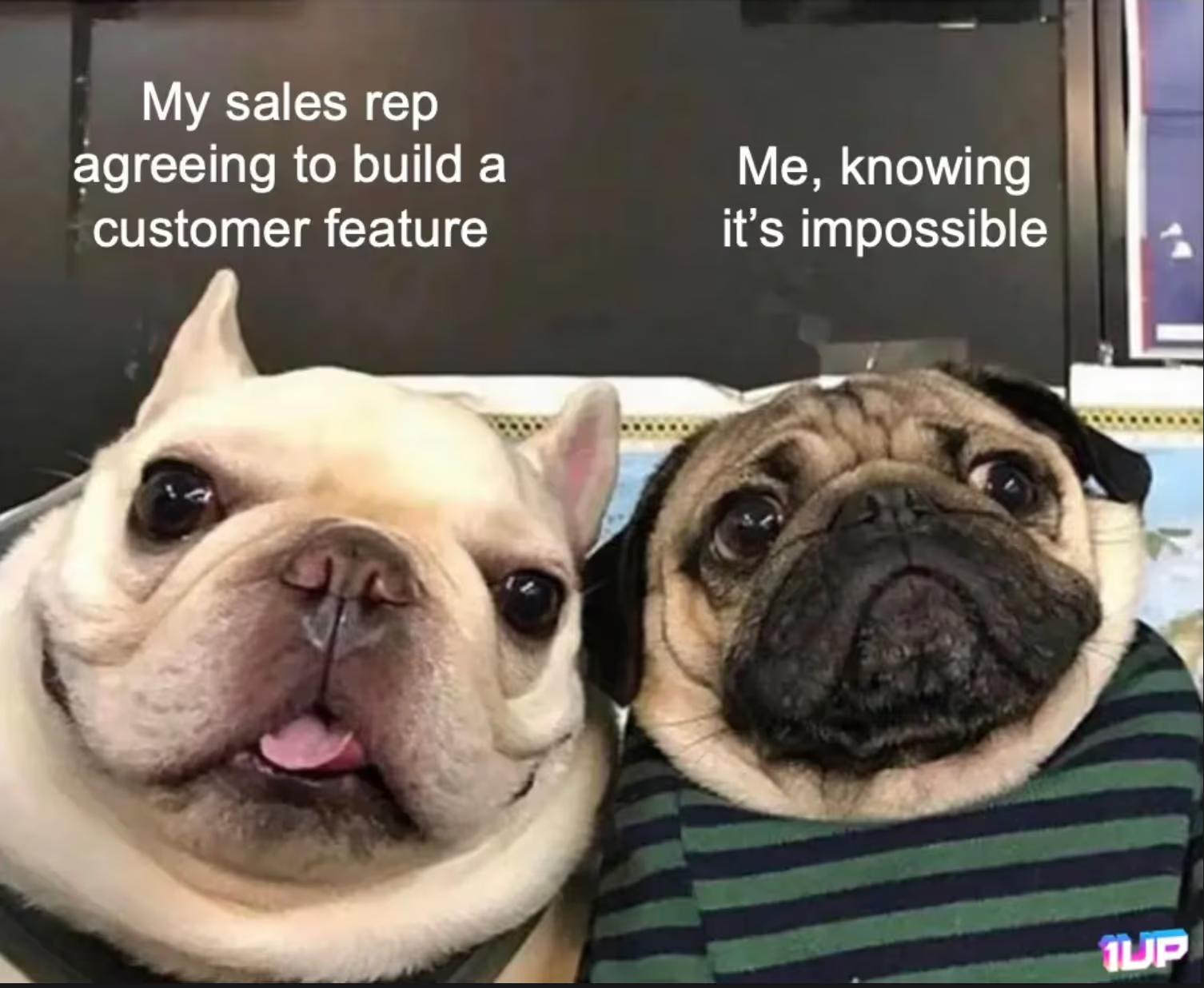
High-performing teams treat this as a shared priority across product, marketing, and presales. They start by asking a simple question: “Would we feel nervous deploying our own product to a new customer?” If the answer is yes, the experience needs work.
Get onboarding right
Make the first steps simple and obvious. Too many companies rely on humans as a band-aid for confusing setup. Investing time here delivers an immediate payoff and scales cleanly as the team grows.
Build better guides
A good user guide offloads effort from SEs by empowering customers to self-serve. Collaborate with product marketing to create short videos, screenshots, and visual walkthroughs that make learning intuitive.
Expand self-service
Even complex tools can offer limited sandbox or guided-trial environments. The more customers can explore safely on their own, the less presales needs to fill the gap.
When the product experience is clear and confidence-building, SEs can focus on solving real business problems instead of patching process holes. That shift alone can transform how quickly a presales team scales.
2. Capture Knowledge and Strengthen Your Documentation
Good documentation is one of the quiet superpowers of a presales team. It keeps work moving, reduces bottlenecks, and helps every SE operate with confidence.
When documentation is outdated or incomplete, the effects ripple quickly. Solution Engineers lose time chasing answers, asking the same questions, or trying to piece together technical details from multiple sources. It slows down deals, erodes consistency, and adds unnecessary stress to already complex workflows.
The truth is, documentation might sit under engineering, but presales often feel the pain first. Teams that sit closer to sales rarely have immediate access to subject matter experts, which makes clear and current documentation even more critical.
Good documentation is not just a reference guide. It is how presales teams gain independence and speed. It allows SEs to troubleshoot, respond to technical questions, and build demos without waiting in line for support.
Here’s a Presales AI use case of how solutions teams are already using their product documentation to automate answers to technical questions. It’s an example of how strong documentation can scale presales efficiency.
If you want to improve the technical enablement side of presales, start by cleaning up your product docs. Make it a regular process, not a side project. And when you need to rally your engineering partners around it, remember that collaboration works better than confrontation. A shared goal of helping customers faster will get you much further than complaints ever will.
When the right information is easy to find, your team spends less time searching and more time solving. That is what real enablement looks like.
3. Connect Enablement to Smarter Qualification
Presales enablement is not just about making the team better at demos or discovery. It is also about helping them focus their time on the right opportunities. That starts with better qualification.
Too often, presales teams get pulled into deals that were never a good fit to begin with. When that happens, the result is predictable. Hours are spent trying to make a product work in an environment that cannot support it, or solving problems that should have been addressed before presales ever got involved.
High-performing organizations know that enablement should help prevent this. The goal is not to chase every deal but to channel presales effort where it matters most.
Ask a few key questions before committing resources:
Can the customer’s environment support our product?
Many sales teams rush to get a customer into the pipeline without confirming the technical basics. A quick validation early in the process can save weeks of rework later.
Are there conflicting products or processes that could block success?
It is common to see good products derailed by existing tools or internal policies. Security software, integration limits, and IT approval cycles can all create friction. Understanding the customer’s stack before deployment prevents these surprises.
What happens if a trial or pilot fails?
This is a question for the account executive, but presales should understand the answer. If the trial is a true evaluation, there may be flexibility. If it is a formal vendor selection, the stakes are much higher. The level of technical effort should reflect that context.
By building qualification skills into presales enablement, teams become more strategic with their time. Deals move faster, win rates improve, and energy is spent where it truly makes a difference.
Enablement should always connect to measurable outcomes. When presales focuses on the right opportunities and the right customers, it stops being a cost center and becomes a multiplier for growth.
4. Keep Presales Focused on What Matters
One of the most common mistakes in growing organizations is letting presales slip into a support role. It often starts with good intentions. A deployment hits a snag, the customer already knows their SE, and the easiest path forward is to keep that SE involved until everything works.
The problem is that this blurs the line between presales and post-sales. Once that happens, Solution Engineers end up carrying support responsibilities long after the deal has closed. What seems like helping the customer in the moment quietly drains capacity and keeps the team from doing its real job: winning new business and enabling growth.
It sounds like common sense, but many organizations still struggle with it. Clear ownership and clean handoffs are essential. Everyone in the sales process should understand who leads each stage and when responsibility shifts.

A presales team that spends half its time troubleshooting deployments will eventually burn out and slow down the entire revenue engine. The same is true for support teams that are pulled too close to sales. They need to collaborate, not overlap.
Enablement can help fix this by training teams on handoff best practices, clarifying process boundaries, and building alignment across the go-to-market organization. When every group knows where its role starts and ends, customers get a smoother experience and internal teams stay focused on their strengths.
The best organizations make this separation a strength. Presales create momentum before the deal, post-sales builds trust after it, and both sides contribute to customer success without stepping on each other’s work.
The goal is to use AI to amplify the human touch so that teams stop guessing and start learning from what’s already working.
5. Automate What Slows You Down
Every presales professional knows the pain of compliance tasks. Security reviews, RFPs, and endless questionnaires can quietly consume hours that should be spent helping customers. As companies grow, these workflows multiply faster than headcount, creating a widening gap between what needs to get done and what the team can realistically handle.
Questionnaire automation has become one of the most valuable tools in presales enablement because it targets that exact problem. The right systems can take repetitive, manual work and turn it into fast, repeatable processes that keep deals moving.
Here’s how sales engineers are using 1up to automate compliance and questionnaire responses. It’s a practical example of how technology can scale presales capacity.
But automation alone is not the answer. The most successful teams combine smart tools with better processes and clear ownership. They work across product, sales, and marketing to streamline how information is stored, shared, and approved.
The result is more than efficiency. It is a presales function that feels empowered instead of reactive, strategic instead of stretched.
The presales role is evolving quickly, and so are its expectations. Automation helps teams keep pace, but culture and collaboration ensure that growth lasts.
Looking Ahead
Presales enablement is entering a new phase. It is no longer about teaching content or running workshops. It is about building the systems, culture, and confidence that help teams perform at their best.
The most successful organizations are treating enablement as a strategic function, not a reactive one. They are connecting learning to outcomes, improving how knowledge flows across teams, and using technology to remove the friction that slows people down.
At its core, great enablement is not about creating better demos. It is about creating better presales professionals. People who understand their craft, trust their process, and have the tools and support to make an impact every day.
Presales teams that embrace this mindset will not just keep up with change. They will define what excellence looks like for the entire go-to-market organization.
Thank you to our partners at 1up for bringing this article to the community!
